
The experience many of us recognize
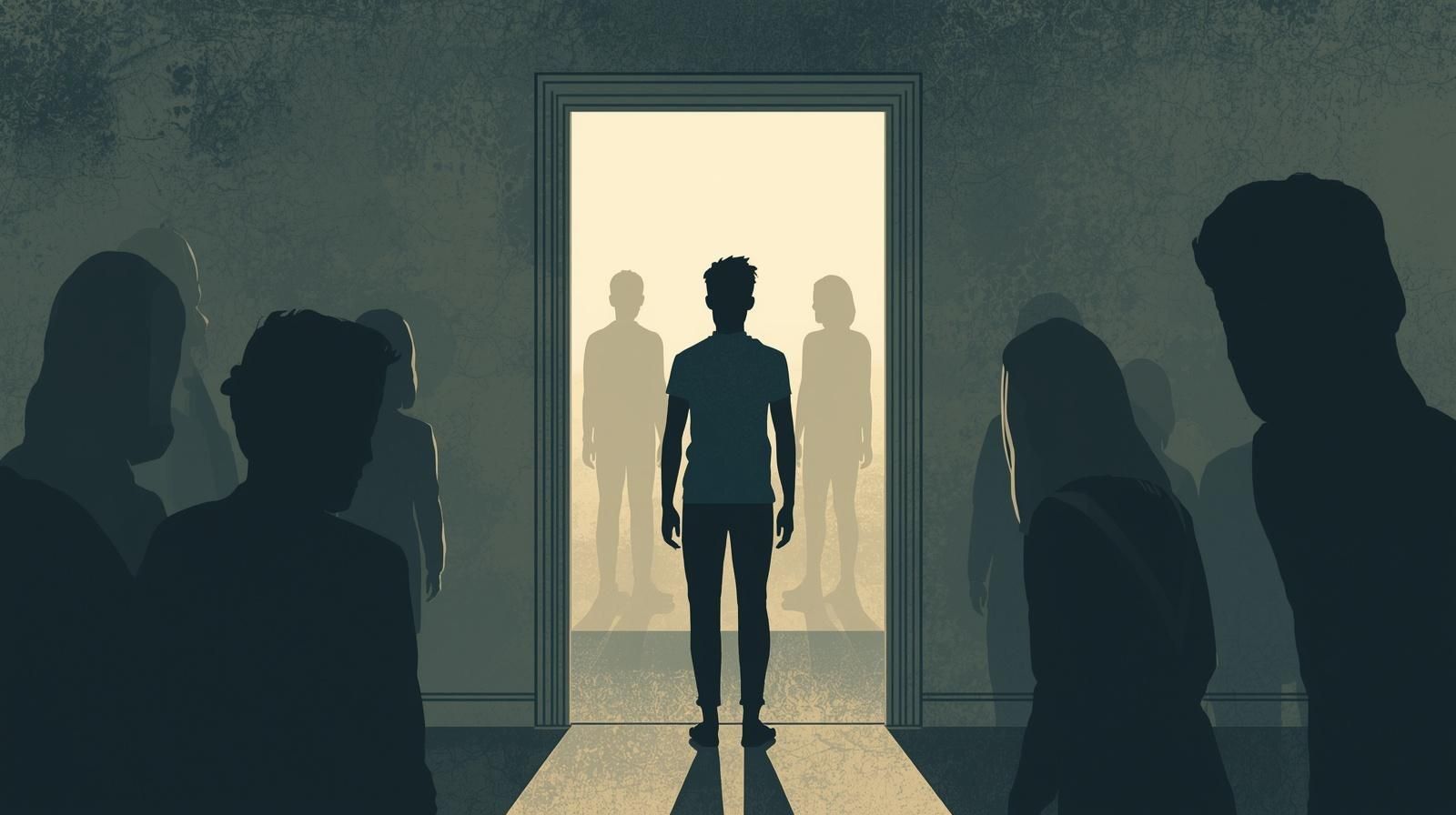
Opening question: “Why do I walk into a room and feel like everyone hates me?”
Common pattern: You notice the room, and a quick, negative interpretation arises: people are judging you, they dislike you, or they’re silent because they’re waiting to criticize you.
Reality check: Often, there isn’t evidence of universal dislike. Bodies in social spaces pick up cues (tone, posture, context) and our brains fill in gaps with fear-based conclusions. This is a surprisingly universal human experience—part anxious, part self-protective

Where do these feelings come from?
Anxiety and threat perception: The brain is wired to scan for social threat. In social contexts, old fear circuits can trigger even when there’s no real danger.
Cognitive biases at play:
Negativity bias: We overweight negative possibilities.
Mind-reading: Assuming others secretly judge us, without solid evidence.
Spotlight effect: Believing others are paying close attention to us more than they actually are.
Past experiences and conditioning:
If you’ve faced criticism, rejection, or bullying in childhood or adulthood, your brain may keep predicting the worst.
Social environments that reward perfectionism or dampen vulnerability can reinforce the belief that “I’m not welcome here.”
Physiological arousal: Sweaty palms, faster heartbeat, or a dry mouth can amplify anxious thoughts, making the perceived threat feel more real.
Neurodiversity factors (more on this in a moment): For some people, neurodiverse profiles (like autism spectrum differences, ADHD, or anxiety variants) can shape how social signals are interpreted or how easily social overwhelm occurs.
Is there a name for this?
General terms:
Social anxiety: A pattern where social situations trigger fear of negative evaluation.
Fear of negative evaluation (FNE): A core feature of social anxiety, where you worry about being judged harshly.
Negative self-schemas: Deep-seated beliefs like “I’m unlikable” or “I’ll embarrass myself.”
Existential or situational paranoia (informal): A temporary perception that others are hostile or judgmental, often in specific contexts.
If it’s frequent and impairing: It could be clinically significant social anxiety or an anxiety disorder. A mental health professional can assess this with you.
Important note: Feeling anxious in social settings doesn’t mean you are “broken.” It’s a signal—your brain is trying to protect you—but with tools, you can change the signal to something more manageable.
Do others suffer in the same way?
Shared human experience, with variation:
Many people experience some degree of social-evaluative worry or “getting judged” concerns, especially in new or high-stakes social settings.
People vary in intensity, triggers, and coping styles. Some experience this more during certain times (after a major life change, during transitions, after a trauma, or during periods of stress).
Neurodiversity factor:
Some neurodivergent individuals (e.g., autistic people, those with ADHD, or high social anxiety) may experience social cue processing differences, heightened sensitivity to sensory input, or slower processing, which can amplify the feeling of being judged.
That doesn’t mean neurodiverse people “have to” feel this way, but it can be more common or more distressing for some in certain contexts. Everyone, neurotypical or neurodivergent, can experience social discomfort.
Practical steps to feel better (and regain control)
Short-term strategies (in the moment):
-
Grounding: Name 5 things you can see, 4 you can touch, 3 you can hear, 2 you can smell, 1 you can taste.
-
Name the thought: “I’m having a negative assumption right now.” Then challenge it: “What’s the evidence for and against this?”
-
Pause and breathe: 4-4-4 breathing (inhale 4, hold 4, exhale 4, repeat) can calm arousal.
-
Reframe quickly: “Even if someone is judging me, I can still handle it.”
-
Posture reset: Sit or stand with a relaxed but confident stance; muscles don’t lie about your internal state.
Medium-term strategies (practice regularly):
-
Exposure with a twist: Start with low-stakes social settings (a short chat with a cashier, a quick check-in with a colleague) and gradually increase exposure.
-
Thought work: Keep a simple thought-diary. When you notice distress in a room, write down the trigger thought, the evidence for/against it, and a balanced alternative.
-
Self-compassion: Treat yourself with the kindness you would offer a friend who feels anxious in a room.
Communication and boundary skills:
-
Script a simple opener: “Hi, I’m [Name]. How’s your day going?” to reduce the pressure of in-the-moment guessing.
-
Seek micro-rituals: If appropriate, ask a clarifying question to reduce ambiguity and shut down mind-reading: “Did I miss something in the meeting?” or “Is there something you’d like me to contribute?”
Sleep, routine, and body health:
-
Prioritize sleep, regular meals, physical activity, and reducing stimulants (caffeine late in the day) to support mood and anxiety management.
If it’s persistent or impairing:
-
Consider professional support: A therapist trained in cognitive-behavioral therapy (CBT), acceptance and commitment therapy (ACT), or social anxiety-focused approaches can be very effective.
-
If you have access, a psychiatrist can discuss the role of medications or other treatments when appropriate.
-
Neurodiversity-informed approaches (optional but helpful):
-
If you’re neurodivergent or suspect you might be, seek clinicians who specialize in neurodiversity-affirming care.
-
Simple accommodations: Allow extra processing time, use written supports in group settings, reduce sensory overload (noise-canceling headphones, quiet spaces) when possible.
Is there a simple path to practice?
A weekly micro-plan:
-
10-minute cognitive-behavioral check-in: What triggered me this week? What evidence do I have for/against my fear? What’s a balanced thought I can use?
-
One social exposure: Plan a brief, manageable social encounter and reflect afterward.
-
5-minute self-compassion exercise: Write a short note to yourself as if you were comforting a friend.
Tracking progress:
-
Rate your distress in social settings on a scale (0-10) before and after an intervention.
-
Note any recurring situations and what helped or didn’t help.
When to seek help
-
If distress is frequent, lasts several weeks, and interferes with work, school, or relationships, consider talking to a mental health professional.
-
If you ever have thoughts of harming yourself or others, seek urgent help through local emergency services or a crisis hotline.
Quick glossary
-
Social anxiety: Fear of social situations due to worry about negative evaluation.
-
Fear of negative evaluation (FNE): Worry that others will judge you unfavorably.
-
Mind-reading: Assuming you know what others are thinking without evidence.
-
Negative self-schema: Deeply held belief about yourself as unworthy or unlikable.
Final thoughts
You’re not alone in feeling like this, and you’re not “broken” for feeling this way. It’s a signal your brain is trying to protect you, but with skills and support, these moments can become less frequent and less intense.
Small shifts, practiced over time, can accumulate into meaningful relief.
If you do wish to access support with this, or learn more about CBT please do not hesitate to reach out.
Christina
Booking a Mental Health Wellbeing Course with Sanitas Hub
Mental Health Consultancy in the Workplace
For further inquiries, company group training or mental health consultancy please do not hesitate to get in touch at info@sanitashub.co.uk