
Menopause affects every woman differently, yet many people in the workplace still feel unsure how to support colleagues going through it. Symptoms can range from hot flushes and fatigue to anxiety, brain fog, and difficulty concentrating — all of which can impact confidence and day-to-day work life.
Creating a menopause-aware workplace doesn’t require complicated policies — it starts with understanding, empathy, and practical support. Here are five top tips for colleagues who want to better support women experiencing menopause at work.

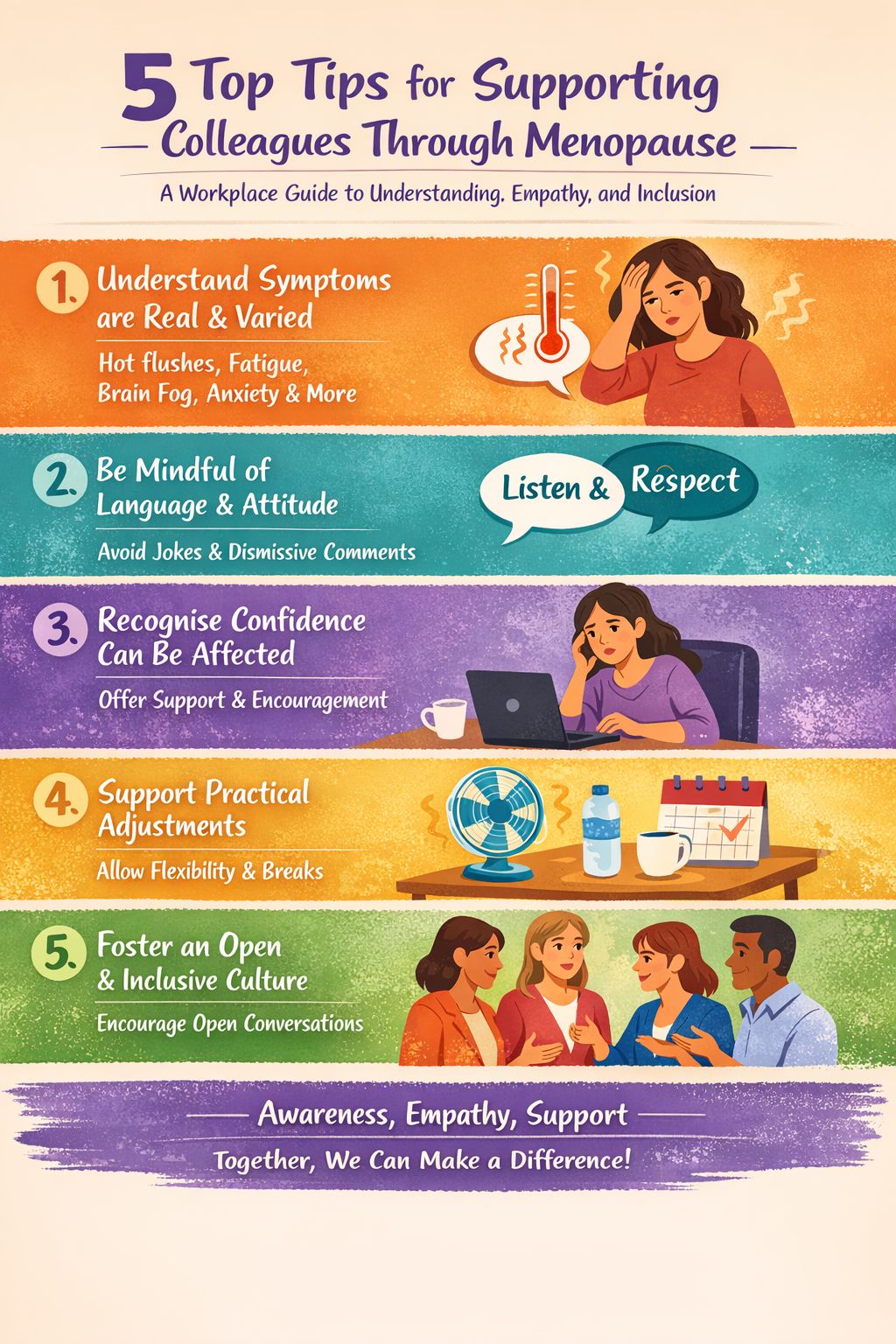
1. Understand That Symptoms Are Real — and Varied
Menopause is not “just hot flushes.” It can involve a wide range of physical and emotional symptoms including:
-
fatigue
-
brain fog
-
anxiety
-
sleep disruption
-
headaches
-
joint pain
-
low mood
These symptoms can fluctuate daily and may affect work performance in ways that are not immediately visible. Taking time to understand this helps colleagues respond with empathy rather than judgement.
Top Tip: Avoid assumptions — every woman’s menopause experience is unique.
2. Be Mindful of Language and Attitudes
Comments like “Is it your hormones?” or jokes about hot flushes may seem harmless, but they can feel dismissive or humiliating. Menopause is a health transition, not a punchline.
Using respectful, supportive language helps create psychological safety and reduces stigma.
Top Tip: If someone chooses to talk about menopause, listen respectfully and take concerns seriously.
3. Recognise That Confidence May Be Affected
Many women experiencing menopause report feeling less confident, particularly if symptoms such as forgetfulness or anxiety affect them at work. This can be especially hard for employees in leadership or client-facing roles.
A little reassurance, patience, and understanding from colleagues can make a big difference.
Top Tip: Offer encouragement and avoid interpreting temporary changes in confidence or concentration as a lack of capability.
4. Support Practical Workplace Adjustments
Simple adjustments can help women manage symptoms more comfortably, such as:
-
access to fans or cooler spaces
-
flexible working arrangements
-
regular breaks
-
access to drinking water
-
quiet spaces for focus
Colleagues who are supportive of these adjustments contribute to a more inclusive workplace culture.
Top Tip: Be understanding if a colleague needs flexibility — small changes can have a huge impact.
5. Help Create an Open and Inclusive Culture
Many women still feel uncomfortable talking about menopause at work because of stigma or fear of being judged. Colleagues play an important role in normalising these conversations.
An open culture means employees feel safe asking for support without embarrassment.
Top Tip: Encourage openness and treat menopause as a normal workplace wellbeing issue.
Final Thoughts
Supporting colleagues through menopause is about awareness, empathy, and respect. By understanding the impact menopause can have and helping to create an inclusive environment, workplaces can ensure women feel valued, supported, and able to thrive.
Menopause awareness benefits everyone — because when workplaces support women well, teams become stronger, healthier, and more inclusive.
Could your workplace benefit from greater menopause awareness?
Small changes in understanding can make a lasting difference to wellbeing, retention, and workplace culture.
Please get in touch to find out more about my 2 hour menopause awareness workshop info@sanitashub.co.uk
Booking a Mental Health Wellbeing Course with Sanitas Hub
Mental Health Consultancy in the Workplace
For further inquiries, company group training or mental health consultancy please do not hesitate to get in touch at info@sanitashub.co.uk